When global hotel brands move into a mountain resort, they’re not following demand. They’re signalling it. Here’s what their arrival in Furano means for property buyers — and why the window is narrower than it looks.
Luxury hotel brands do not enter markets on instinct. Before a Westin or a JAL-backed auberge commits capital to a location, they commission years of feasibility studies, guest demand modelling, and competitive benchmarking. The due diligence is extensive, expensive, and deliberately conservative.
Which is why, when brands of that calibre announce in a specific mountain town, it pays to treat the news as more than a travel story.
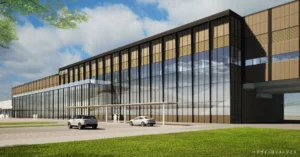
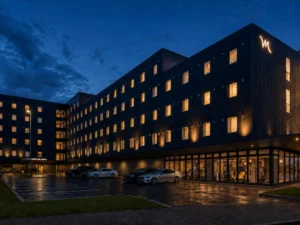
Two such announcements have now landed in Furano. A new auberge concept backed by Japan Airlines is coming to the Nakafurano area, focused on destination dining and curated experiences. A Westin Hotels & Resorts property is planned for the Kitanomine zone — the same area that anchors Furano’s ski base. Together, they represent the clearest signal yet that Furano is entering a new phase of its development as a destination.
For property investors, the timing of that signal matters enormously.
What Branded Hotels Actually Do to a Destination
The conventional reading of a luxury hotel announcement is straightforward: more rooms, more visitors, better amenities. That’s true, but it understates what actually happens to the market around a branded entrant.
Global hotel brands bring three things that independent properties cannot replicate.
The first is distribution. A Westin doesn’t rely on destination-level marketing to fill its rooms. It connects directly into the Marriott Bonvoy network and its tens of millions of loyalty members, many of whom will encounter Furano for the first time through a hotel search rather than a ski resort one. The destination gets placed in front of a high-spending audience it couldn’t otherwise reach.
The second is a baseline shift in expectations. Once a Westin operates in a town, the reference point for what “good” looks like changes — for visitors, for other operators, and for future development proposals. The effect compounds over time. Restaurants raise their standards. Retail improves. Services that were adequate become insufficient. The whole destination calibrates upward.
The third, and most relevant to property buyers, is media coverage and international credibility. A Westin opening in Hokkaido will be covered across travel publications in Australia, Singapore, the UK, Hong Kong, and beyond. Furano gets placed on shortlists it has never previously appeared on. That reach converts, slowly but consistently, into property buyer awareness.
None of this happens overnight. But the direction, once set, tends to be durable.
The Niseko Precedent
Niseko is the clearest example of how this sequence plays out in a Hokkaido context, and it’s worth understanding the pattern before applying it to Furano.
Niseko’s transformation began with independent boutique operators recognising the quality of the snow and the potential of the location. Then came a wave of mid-market hotel and condo development. Then global brands — Park Hyatt, followed by Aman, then a sustained wave of luxury residences affiliated with international hospitality groups.
Each stage brought a new class of guest. Each new class of guest lifted nightly rates. Higher nightly rates improved rental yields. Improved yields attracted more buyers. More buyers pushed land and property prices higher. And with every step, the reference point shifted — properties that seemed expensively priced before a major brand arrived looked conservatively priced in retrospect.
The buyers who performed best were not necessarily those who bought at the absolute bottom. They were the ones who moved when the signals were visible but before the broader market had fully priced in what those signals meant. That window — between early evidence and consensus acceptance — is where the most meaningful returns were made.
Furano is at the beginning of an analogous sequence.
What’s Specifically Happening in Furano Right Now
The JAL auberge project brings something Furano has not previously had at this level: a curated destination concept designed to attract guests who are travelling specifically for the experience, not just the ski product. The auberge model — smaller, experiential, with a strong food and beverage identity — tends to attract higher-spending visitors with longer decision horizons and a greater likelihood of returning or investing.
The Westin announcement carries different but complementary weight. Westin, as part of the Marriott International portfolio, does not enter markets without multi-year demand visibility. Its planned presence in the Kitanomine zone — the geographic core of Furano’s ski area — signals confidence in both the winter product and the year-round potential of the destination.
Crucially, both projects are locating in or immediately adjacent to the zones where Furano’s residential property market is already most active. That’s not coincidence. Brands conduct the same location analysis that serious property buyers conduct. They arrive at the same conclusions.
For investors, the implication is that the areas already considered most desirable are now being endorsed by institutional-level research — research that buyers can benefit from without having commissioned it.
Where Lyra Fits Into This Picture
Every time a major branded hotel has entered a ski resort market, the residential product that has performed best in the following cycle has shared a consistent profile: hotel-quality amenities and management, within a privately owned structure, positioned close to the primary lift access.
Owners in these buildings benefit on two fronts simultaneously. As owners, they hold an appreciating asset in a market where the destination premium is still being established. As operators — through managed rental programs — they effectively participate in the guest experience economy that the hotel brands around them are building, without paying hotel prices to do so.
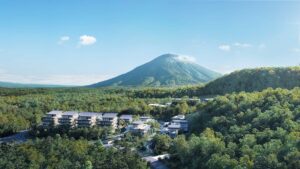
Lyra Furano by Nozo Hotel is that product in Furano right now.
A limited collection of just 20 residences, Lyra is positioned three minutes on foot from the Kitanomine Gondola — the same zone where the Westin is headed. The development offers a gym and spa, rooftop bar, on-site shops and cafés, owner locker storage, and one parking space per unit. Residences range from one to four bedrooms, with professional management available for owners who want to place their property into the short-stay rental market.
Pricing starts from approximately ¥99,858,960 — around $665,700 USD — which positions Lyra at the premium end of Furano’s new-build market, and well below comparable managed residence products in Niseko.
The Westin will bring its guests to Furano. Those guests will ski the same mountain, eat in the same town, and move through the same destination that Lyra owners will be part of. The hotel will do the work of building Furano’s international profile. Lyra owners will hold the asset that benefits from it.
The Timing Argument, Plainly Stated
Furano is not Niseko. It is smaller, less internationally established, and still forming its identity as a luxury destination. That is precisely the point.
Niseko’s most significant property returns accrued to buyers who moved when the signals were legible but the price hadn’t yet caught up with the direction of travel. The arrival of branded hotel development was one of the clearest of those signals — and it was available to read at the time, for those paying attention.
In Furano today, those signals are present and accumulating. Infrastructure is improving. Visitor numbers are broadening across seasons. International air access is expanding, including United Airlines’ new direct San Francisco–Sapporo service from late 2025. And now, two global-calibre hotel brands have committed to the destination.
Pricing has not yet fully reflected any of this. The entry-level market in Furano still offers access at values that would be considered exceptional in Niseko. That gap will not remain indefinitely.
The question for buyers is not whether Furano’s market will adjust to reflect these signals. It is whether they want to be positioned before or after it does.
Interested in Lyra Furano or other residential opportunities in the area? Explore the Furano property market or contact the Nisade team to discuss availability.