Japan has produced three distinct mountain resort investment destinations — each at a different stage of its cycle, with a different property mix and a different buyer profile. This guide compares them honestly, so you can decide which one fits your strategy.
Quick Navigation
- Market Maturity
- Property Type Breakdown
- Developments to Watch
- Entry Prices and the Currency Opportunity
- Accessibility and Airlift
- Which Buyer Fits Which Market?
Why These Three Markets, and Why Now
Japan’s alpine property markets have attracted sustained international attention over the past decade, and in 2026 that interest shows no sign of slowing. Foreign real estate investment across Japan reached ¥2.3 trillion (approximately $15.7 billion USD) in 2024, a 12% year-on-year increase, and resort destinations have been among the primary beneficiaries.
But Niseko, Hakuba, and Furano are not interchangeable markets. They sit at meaningfully different points in their respective development cycles, offer different types of property, attract different guest profiles, and suit different investor objectives.
This comparison doesn’t rank them. It maps them — so you can identify which one aligns with what you’re actually trying to achieve.
Section 1: Market Maturity
Niseko: The Established Leader
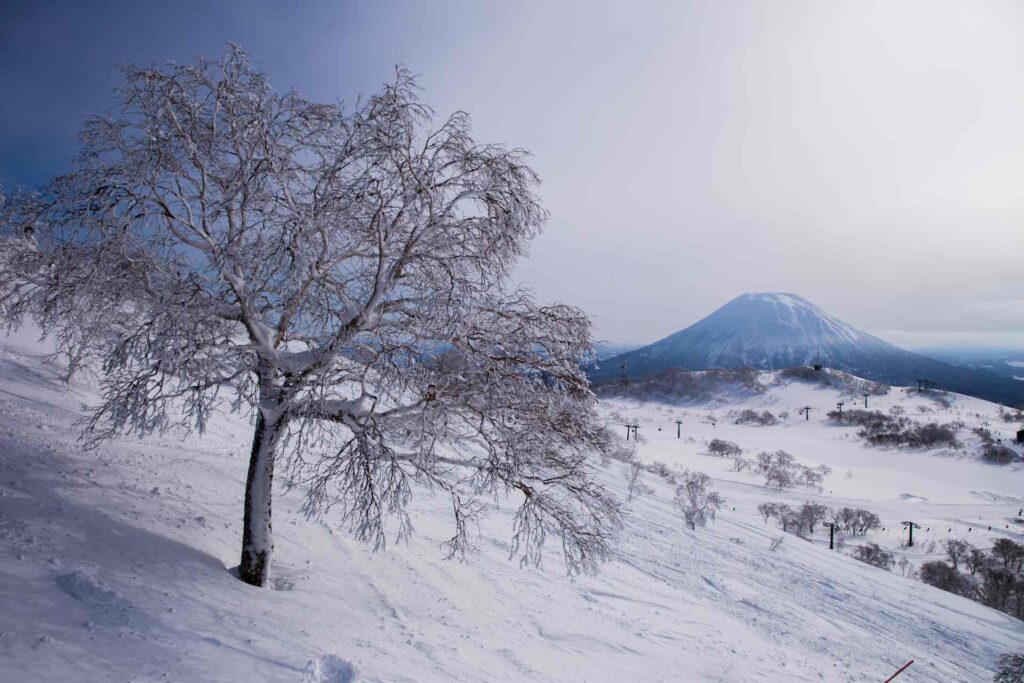
Niseko is Japan’s most internationally recognised alpine resort market, and by most measures the most mature. What began as a niche discovery by Australian ski enthusiasts in the early 2000s has evolved into a sophisticated, globally connected resort ecosystem spanning four linked zones: Hirafu, Hanazono, Niseko Village, and Annupuri.
The visitor base reflects that evolution. Total arrivals reached 3.2 million in the 2024/25 season, a 10% year-on-year increase. Australian visitors grew their share of international winter arrivals from 17% to 21% between 2018 and 2025, while the United States grew from 8% to 13% — reflecting a genuine diversification of source markets beyond the traditional Asia-Pacific core.
Property transactions in the region are primarily cash-based, conducted by high-net-worth investors. Foreign buyers account for approximately 60–65% of transactions, according to market data from Niseko Realty. The market is deep, liquid by resort standards, and underpinned by a development pipeline — 22 hotel, residence, and mixed-use projects are currently in progress — that signals continued institutional confidence.
The trade-off for that maturity is pricing. Premium ski-in/ski-out properties in Hirafu now command ¥1.5–3.0 million per square metre, levels that approach central Tokyo for top-tier product.
In summary: Niseko is a proven, liquid, and internationally credible market. The easy early gains are behind it, but the quality of its infrastructure, management ecosystem, and global brand recognition make it the benchmark against which other Japanese alpine markets are measured.
Hakuba: Mid-Cycle with Institutional Momentum
Hakuba, in Nagano Prefecture, is most usefully understood as the Honshu equivalent of Niseko at an earlier stage of its international recognition. The resort gained global exposure hosting alpine and Nordic events at the 1998 Nagano Winter Olympics, but its property market remained primarily domestic for most of the following two decades.
That has changed materially. Land prices in Hakuba Village rose 32.4% in 2025 — the second consecutive year the resort topped Japan’s national land price growth rankings. Government land survey data for 2026 confirmed continued growth above 26% for Hakuba’s benchmark locations. The area near Hakuba Iwatake Mountain Resort reached ¥49,000 per square metre in the most recent National Tax Agency data, having risen ¥12,000 from the prior year.
International buyers, led initially by Australians and more recently by Southeast Asian and North American investors, have driven a broadening of the transaction base. The resort has also attracted a growing permanent international community — Hakuba International School, English-language services, and an established expat network all contribute to making it one of Japan’s most foreigner-accessible mountain towns.
In summary: Hakuba is in active price discovery, with strong momentum, credible institutional backing, and a land price trajectory that reflects genuine tourist demand rather than speculation. Buyers are arriving at a mid-cycle moment — ahead of the full maturation, but with clear signals that the trajectory is established.
Furano: Early-Stage with Visible Catalysts
Furano is the earliest-stage of the three markets, but also the one with the most legible accumulation of forward signals. Located in central Hokkaido, the resort offers two interconnected ski zones (Furano and Kitanomine), world-class powder snow, and a four-season visitor profile anchored by the lavender fields and cycling tourism that draw visitors from June through September.
Crucially, Furano has retained the authentic Japanese character that Niseko has to some degree traded away through internationalisation. For a subset of buyers — and a growing share of the highest-spending visitors to Hokkaido — that authenticity is the asset.
The Kitanomine area, which anchors the ski base and the core residential zone, recorded the highest land price growth rate in Hokkaido for two consecutive years, as reported by NHK and the Nikkei Hokkaido edition in March 2025. The market is attracting attention at the institutional level — the Westin Hotels & Resorts and a JAL-backed auberge concept have both announced development plans in the Furano area — while remaining genuinely accessible in price terms for individual buyers.
In summary: Furano combines early-stage pricing with an unusually visible set of forward catalysts. The risks are commensurate with the stage of the market — lower liquidity, thinner management infrastructure, a smaller established international community — but the opportunity set is correspondingly wider.
At a Glance: Market Maturity
| Niseko | Hakuba | Furano | |
|---|---|---|---|
| Market stage | Mature / institutional | Mid-cycle / accelerating | Early-stage / catalyst-driven |
| International buyer share | ~60–65% of transactions | Growing; historically domestic | Emerging; currently limited |
| Liquidity | High | Moderate and improving | Lower; improving |
| Management infrastructure | Deep and professional | Growing | Earlier-stage |
| Brand recognition | Global | Asia-Pacific / growing West | Niche; growing |
| Annual visitor arrivals | 3.2 million (2024/25) | ~2.7 million (2024) | Growing; four-season |
Section 2: Property Type Breakdown
The mix of property types available in each market reflects its stage of development and the demands of its buyer base. Understanding what’s actually for sale — and what performs — is as important as understanding the destination.
Niseko
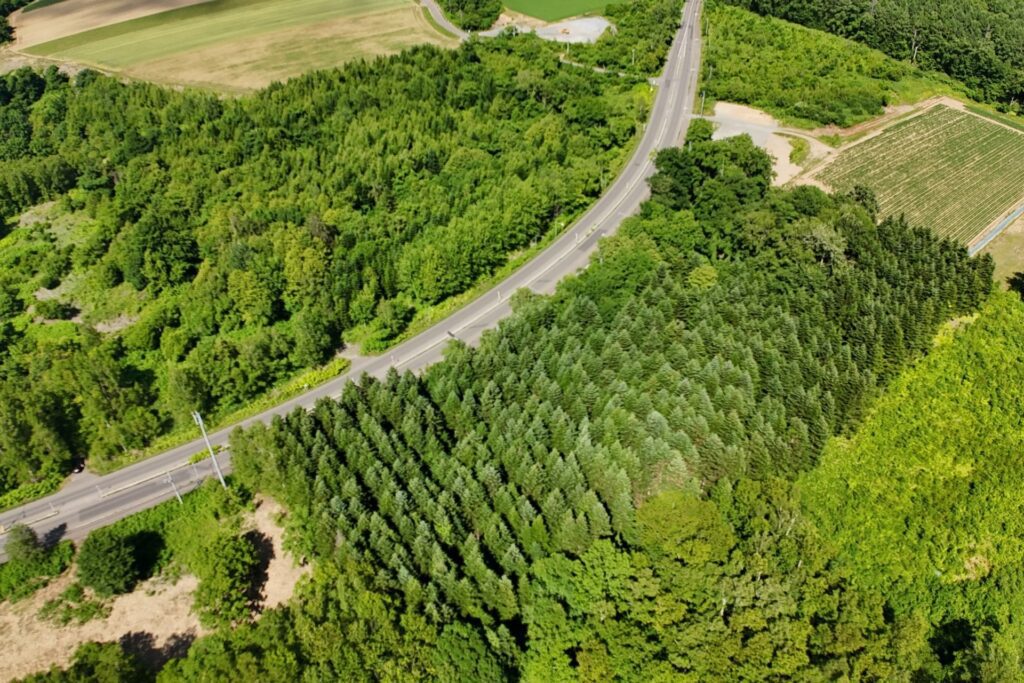
Niseko’s property landscape is the most diversified of the three. The market has evolved through several distinct waves of development, and the residue of each is visible in current inventory.
Raw land and agricultural plots were the earliest investment vehicle, particularly in the outer zones. Much of this land, located more than a few kilometres from the ski fields, offers limited rental potential. The value proposition is almost entirely speculative.
The older apartment segment has grown in recent years but faces headwinds. As Niseko Realty notes, older apartments can struggle to maintain initial values when newer developments enter the market, as buyers and renters naturally gravitate to fresher inventory. Differentiation is difficult at the commodity end of the market.
Houses and chalets — from older timber builds to contemporary architecturally-designed properties — form a significant part of the mid-to-premium market. These range from traditional pensions to high-specification custom lodges and ski-in/ski-out residences.
New-build developments dominate current attention and supply. The pipeline of 22 active hotel and residential projects includes ultra-luxury branded residences at the top (Aman Niseko, 61 units, 2029; Capella Niseko, 2026), through hotel-condo hybrids like Hotel101 Niseko (482 units, 2026), to smaller managed condominium developments. Rising construction costs have led many developers to pivot toward serviced land plots — including Odin Hills Hanazono (88 plots) and Kaba Niseko (33 plots) — where buyers can build custom designs on serviced land.
Japan’s branded residences market is dominated by Niseko, which accounts for 78% of total national supply across 12 projects and approximately 1,357 units.
Hakuba
Hakuba’s property landscape is less vertically integrated than Niseko’s and more heterogeneous as a result. The dominant property types reflect the resort’s recent trajectory from a primarily domestic ski destination to an emerging international market.
Older pensions and lodges — small guesthouses that were once the backbone of domestic ski tourism — are available at entry-level prices and in some cases offer immediate conversion potential for operators willing to invest in upgrade and repositioning. The lodge and pension segment also includes properties already operating as successful short-stay businesses, which provide immediate cash flow visibility.
Chalets and houses dominate the new-build pipeline for premium buyers. Over the past five years there has been sustained chalet construction activity in the Happo, Wadano, Echoland, and Misorano areas. The more recently completed La Vigne (38 units, December 2024) represents the newer-style managed condominium concept entering the market — a product category that is still relatively limited in Hakuba compared to Niseko.
Land purchases have grown as investor interest has accelerated. For buyers seeking to build custom properties, Hakuba offers more available sites than Niseko at more accessible prices, though prime locations are tightening rapidly as development activity increases.
Hakuba’s branded residences sector is nascent but accelerating. The Banyan Tree resort under construction in Wadano (108 hotel rooms and 48 condominiums, due 2028) will be the market’s first globally branded residential offering.
Furano
Furano’s property market is the thinnest of the three in terms of volume and variety of available stock, which is both a limitation and an opportunity depending on the buyer’s perspective.
The current available inventory spans older chalets and houses in the Kitanomine zone, some of which have been operated as pension-style guesthouses and offer renovation upside; occasional land parcels in and adjacent to the ski base area; and a very small number of new-build developments.
New-build managed apartments and residences are rare, which is precisely what makes Lyra Furano by Nozo Hotel a notable entry. A limited collection of just 20 apartments — ranging from one to four bedrooms — Lyra is the only professionally managed new-build condominium development currently available in the Furano market. It is positioned three minutes’ walk from the Kitanomine Gondola, with on-site amenities including a gym and spa, rooftop bar, and café, and entry pricing from approximately ¥99,858,960 (around $665,700 USD). For buyers seeking turnkey managed product at the Furano ski base, Lyra is effectively the only option in this category.
At a Glance: Property Type Comparison
| Niseko | Hakuba | Furano | |
|---|---|---|---|
| Land / serviced plots | Available; outer zones speculative | Growing; prime sites tightening | Limited; occasional opportunities |
| Older chalets / houses / pensions | Available across all zones | Core of mid-market supply | Available; renovation potential |
| New-build chalets | Active pipeline; premium pricing | Active and growing | Very limited |
| Managed apartments / condos | Deep supply; key new pipeline | Small but growing (La Vigne, Banyan Tree residences) | Very limited; Lyra is current benchmark |
| Branded residences | 78% of Japan’s national supply | Nascent (Banyan Tree incoming) | Not yet established |
| Development land | Available; suburban zones tighter | Active market; good availability | Scarce; high demand near ski base |
Section 3: Developments to Watch
In resort property markets, what’s being built tells you as much about where the market is heading as what’s already there. Here are the key developments and infrastructure signals in each destination.
Niseko
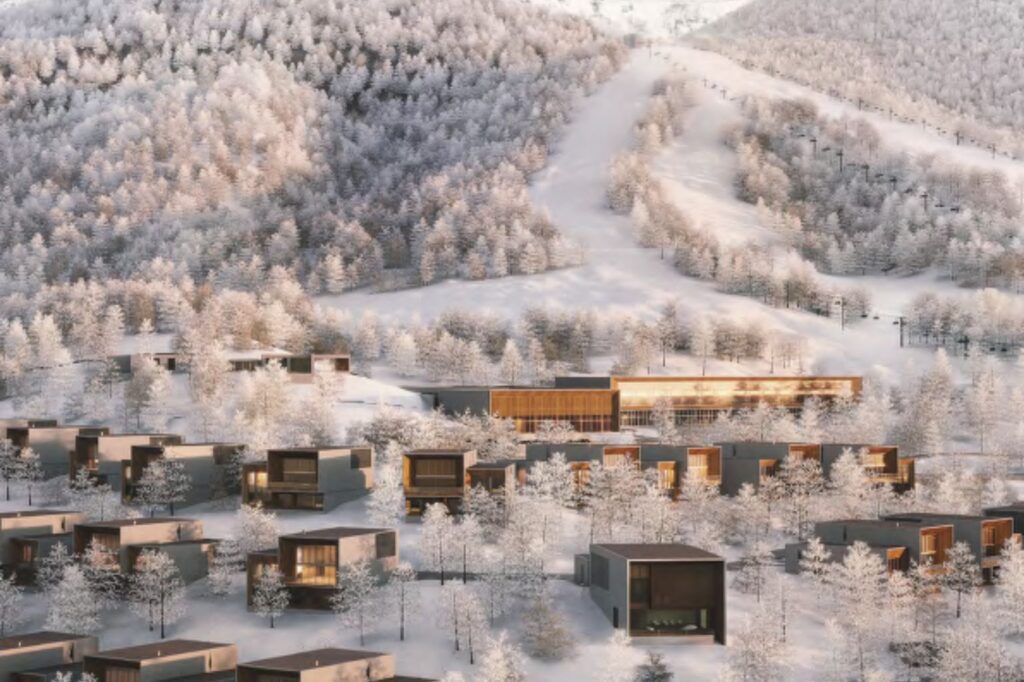
The current pipeline is the deepest and most ambitious in Japan’s alpine market. Key developments include:
- Capella Niseko — Ultra-luxury branded hotel scheduled for completion in 2026; a marquee signal of continued confidence from globally recognised hospitality operators
- Aman Niseko Resort and Residences — 61 ultra-luxury units planned for 2029, the most exclusive branded residence product in the Japanese alpine market
- Six Senses Hokkaido Niseko — Scheduled for 2029 as part of World Brands Collection’s Japanese expansion
- Hotel101 Niseko (482 units, 2026) and Moxy Niseko Village (310 keys, 2026) — Broadening the accommodation spectrum at scale
- Odin Hills Hanazono (88 plots) and Hanacreek (82 residences, 2027) — Custom villa and serviced land offerings reflecting developer pivot toward build-your-own product
- Kutchan Shinkansen Station — The Hokkaido Shinkansen extension to Sapporo, with a stop at Kutchan (the station adjacent to Hirafu village), is scheduled for the early 2030s. This is the most significant single infrastructure event in Niseko’s medium-term future, expected to substantially reduce travel time from Sapporo and New Chitose Airport.
According to a Colliers Japan land price survey, four areas in Hokkaido ranked in Japan’s top ten for steepest land price increases in 2025, driven in part by the volume of hotel and condo development.
Hakuba
Hakuba’s development pipeline is smaller in absolute terms but meaningful relative to the market’s current size. The projects announced represent the clearest signal yet that global capital views Hakuba as the next credible alpine destination in Japan.
- Banyan Tree Hakuba (Wadano) — Construction has commenced. Completion due 2028 with 108 hotel rooms and 48 condominiums. This is Hakuba’s first globally branded hotel-and-residence product and the most significant single development in the valley’s recent history
- The Alps Hotel Hakuba (Norikura) — Acquired and under renovation by Tokyo-based Plan·Do·See; opening December 2026 as THE ALPS HOTEL HAKUBA, with ski-in/ski-out access to Hakuba Norikura. The same group has acquired three additional prime sites in Happo for future mixed-use development
- Hakuba Luxury Project — A further Banyan Group development in the planning stages. Signals that the group is treating Hakuba as a multi-property market rather than a single-asset bet
- La Vigne (Echoland, 38 units) — A managed condominium product delivered December 2024; its rapid sell-through is evidence of latent demand for this product category in the valley
- New gondola infrastructure — The new Iwatake gondola (opened 2024) and announced gondola upgrades at Happo and Tsugaike are improving on-mountain experience and reinforcing the destination’s international credibility
Furano
Furano’s development signals are fewer in number but significant in weight, and should be read in the context of a market where institutional development has historically been minimal.
- Westin Hotels & Resorts — A Westin-branded property is planned for the Kitanomine zone — the same area that anchors the ski base and the core of Furano’s residential market. The Westin brings global distribution and brand recognition that Furano has not previously had access to
- JAL-backed Auberge — A curated auberge concept backed by Japan Airlines is planned for the Nakafurano area. The auberge model attracts high-spending, experience-focused guests and supports year-round visitor demand
- Lyra Furano by Nozo Hotel — The only professionally managed new-build residence currently available in the market. Its launch and sell-through rate will be watched as a leading indicator for the premium residential market in Furano
- United Airlines San Francisco–Sapporo service — Announced for the 2025/26 winter season, this direct North American connection meaningfully broadens Hokkaido’s accessible international visitor base and is of direct benefit to Furano
- Land price recognition — Furano’s Kitanomine area recorded the highest land price growth rate in Hokkaido for two consecutive years (2024 and 2025), as reported by NHK and Nikkei Hokkaido. This data point has begun to attract investor attention at the national level in Japan
At a Glance: Key Developments
| Niseko | Hakuba | Furano | |
|---|---|---|---|
| Headline hotel development | Capella (2026), Aman (2029), Six Senses (2029) | Banyan Tree (2028), Alps Hotel (2026) | Westin (TBC), JAL Auberge (TBC) |
| Branded residences | Active (Aman, Capella, Hotel101) | Incoming (Banyan Tree condos) | Not yet established |
| Infrastructure upgrade | Kutchan Shinkansen (early 2030s) | New Iwatake gondola (2024); Happo & Tsugaike gondola upgrades | Expanding airlift via New Chitose / Asahikawa |
| New managed condo supply | Large pipeline | Small but growing | Lyra Furano (only current example) |
| Market signal | Continued institutional deepening | First globally branded entrant | Early branded hotel entry; early residential new-build |
Section 4: Entry Prices and the Currency Opportunity
Price Ranges by Market
Price ranges in Japanese resort markets vary substantially by zone, property type, age, and proximity to lifts. The figures below reflect currently available product across the three markets; they are illustrative rather than exhaustive and should be verified against current listings.
| Property Type | Niseko | Hakuba | Furano |
|---|---|---|---|
| Older apartment / studio | From ¥72M (~$480K USD) | From ¥20–40M (~$130–265K USD) | Negotiable; limited supply |
| Older chalet / house | From ¥100M+ (~$665K+ USD) | From ¥30–80M (~$200–530K USD) | From ¥30–60M (~$200–400K USD) |
| New-build managed apartment (1–2 bed) | From ¥150M+ (~$1M+ USD) | From ¥90–130M (~$600–865K USD) | From ¥99.9M (~$665K USD) — Lyra |
| Luxury villa / chalet (3–4 bed) | From ¥300M+ (~$2M+ USD) | From ¥170–250M+ (~$1.1–1.7M+ USD) | Limited; emerging |
| Serviced land (per sqm) | ¥189,000/sqm (Hirafu benchmark) | ¥49,000/sqm (Iwatake benchmark, NTA data) | Kitanomine data — highest growth in Hokkaido 2024/25 |
Note: USD equivalents are indicative based on mid-2026 exchange rates. All prices should be confirmed directly with agents as market conditions change.
A notable data point for context: a newly built alpine chalet in Hakuba (Echoland, 3 bed, 133 sqm) recently listed at approximately ¥1,161,278 per sqm. A comparable Niseko Hirafu benchmark sits at ¥189,000 per sqm for land alone — a useful illustration of how the premium for Niseko’s ski-base land has diverged from other markets.
The Currency Opportunity
No comparison of Japanese alpine property in 2026 is complete without acknowledging the Japanese yen’s position.
The yen has depreciated roughly 30–35% against the US dollar since 2021, according to market data from e-Housing Japan. Against the Australian dollar, the British pound, and Singapore dollar, the shift has been similarly meaningful. The practical effect: a property that cost the equivalent of $1 million USD in foreign-currency terms in 2021 can now be acquired for significantly less in foreign-currency terms, even where the yen-denominated price has risen.
Entering 2026, USD/JPY was trading in the mid-¥150s — near multi-decade lows. The Bank of Japan has begun a gradual normalisation of its monetary policy, moving rates cautiously from near-zero. Most analysts expect a gradual strengthening of the yen over the medium term rather than a sharp reversal, which means the window of currency-adjusted advantage for foreign buyers is likely open but narrowing rather than widening.
For buyers converting from USD, AUD, SGD, or GBP, the implication is that the full-cycle case for Japanese alpine property — appreciation in yen terms plus potential yen appreciation back toward historical levels — is unusually compelling at this moment. That case exists across all three markets but is most acute in Furano and Hakuba, where yen-denominated prices have not yet moved as far as Niseko to reflect the destination’s underlying trajectory.
Section 5: Accessibility and Airlift
How guests reach a resort drives occupancy, nightly rates, and ultimately yield and capital values. Airlift and ground transport are among the most important and most underweighted factors in resort property investment analysis.

Niseko
Niseko’s gateway is New Chitose Airport, approximately two hours by road or direct shuttle bus. New Chitose serves 44 airlines across 20 international destinations and handles strong direct inbound from key Asian source markets including Hong Kong, Seoul, Taipei, and Singapore. Direct North American access has expanded with United Airlines’ San Francisco–Sapporo route, improving connectivity for the US and Canadian buyer/guest market.
The most significant medium-term airlift story for Niseko is infrastructure rather than aviation: the Hokkaido Shinkansen extension to Kutchan Station, scheduled for completion in the early 2030s, will create a direct bullet train link between Tokyo and the resort. This will substantially expand Niseko’s accessible domestic catchment and reduce reliance on New Chitose as the single gateway.
Hakuba
Hakuba’s accessibility profile is meaningfully different from Niseko’s and is arguably its most underrated asset for investors. The resort is reachable from Tokyo via the Hokuriku Shinkansen to Nagano (approximately 90 minutes) followed by a bus to Hakuba (60–90 minutes) — a total journey of around three hours, without an international flight. This makes Hakuba uniquely accessible to the vast domestic Japanese market and to international visitors already in Tokyo, without requiring a separate flight to Hokkaido.
From an international perspective, visitors fly into Tokyo (Narita or Haneda) and transfer via train and bus. The total journey from Tokyo’s airports to Hakuba runs approximately five to six hours via direct shuttle bus, or around three to four hours via the Shinkansen connection. For domestic visitors from the Kansai region (Osaka, Kyoto, Nagoya), Hakuba is similarly accessible — approximately five to six hours by rail.
This multi-gateway model is a structural advantage for occupancy. Hakuba doesn’t depend on a single airport or a single flight route. It draws visitors from Japan’s two largest population centres and a broad international catchment.
Furano
Furano’s access profile has historically been a limitation relative to Niseko and Hakuba, but is improving meaningfully. Visitors fly to either New Chitose Airport (Sapporo) or Asahikawa Airport — Furano sits roughly equidistant between the two — then transfer by road (approximately two hours from New Chitose, or about an hour from Asahikawa).
The expansion of international routes into both airports is the most consequential airlift development for Furano. The United Airlines San Francisco–Sapporo route launched for the 2025/26 winter season opens North American access to Hokkaido without requiring a connection through Tokyo. Asahikawa Airport also serves direct international routes from Hong Kong, Taipei, and Seoul during the ski season, providing a shorter ground transfer for some international visitors.
Furano does not currently benefit from Shinkansen access and is unlikely to in the near to medium term. The airport-to-resort transfer remains the primary access constraint for international visitors — something buyers should factor into their rental market expectations, particularly relative to Hakuba’s domestic catchment advantage.
At a Glance: Accessibility
| Niseko | Hakuba | Furano | |
|---|---|---|---|
| Primary international gateway | New Chitose Airport (Sapporo) | Tokyo (Narita/Haneda) | New Chitose + Asahikawa |
| Journey from gateway to resort | ~2 hrs by shuttle | ~3 hrs (Shinkansen + bus) | ~1–2 hrs by road |
| Shinkansen access | Kutchan extension (early 2030s) | Yes — Nagano station, then bus | No |
| Domestic market accessibility | Strong | Very strong (Tokyo + Kansai) | Moderate |
| Direct North American route | United SF–Sapporo (2025/26) | Via Tokyo | United SF–Sapporo (2025/26) |
| Key airlift signal | Shinkansen extension catalyst | Multi-gateway domestic strength | Improving international airlift; Asahikawa routes |
Section 6: Which Buyer Fits Which Market?
These three markets are not competing for the same buyer. The clearest way to navigate the comparison is to ask what you’re actually trying to optimise for.
The Niseko Buyer
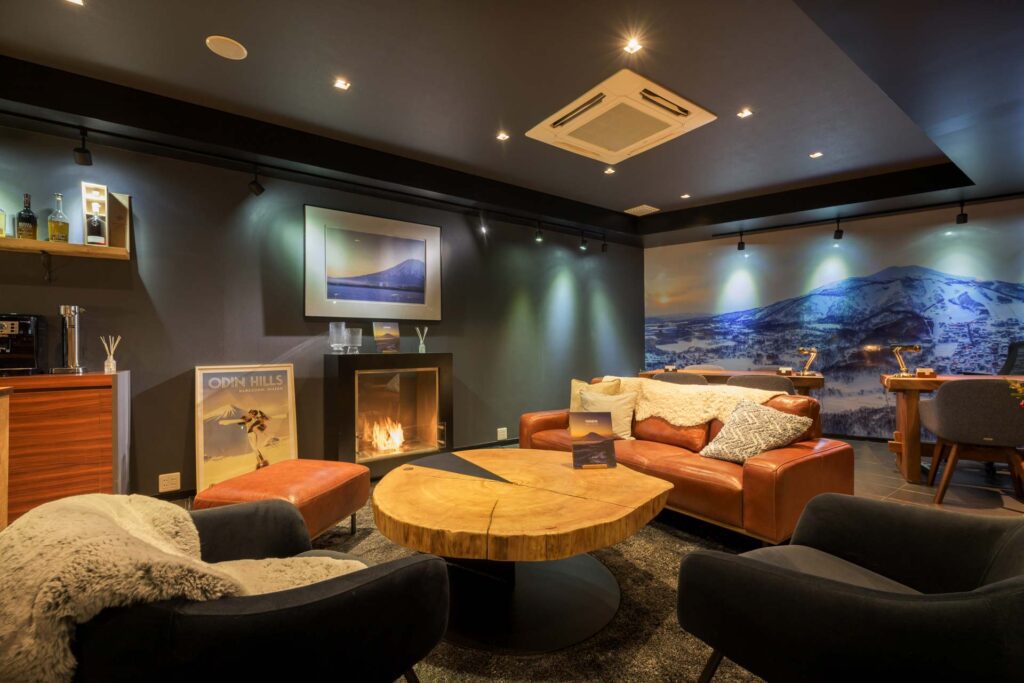
You are comfortable paying a premium for market depth, proven infrastructure, and global brand recognition. You value liquidity — the ability to exit without a long wait for the right buyer — and you understand that the significant early appreciation in the market is largely behind you. What Niseko now offers is a stable, institutionally backed resort market with a development pipeline that continues to add credibility and price-support. You are likely buying at ¥150M and above, and you are looking for a professionally managed asset in a market you can confidently explain to your accountant and your spouse. The upcoming Shinkansen extension is a medium-term catalyst you want exposure to.
The Hakuba Buyer
You have done your research on Japan and you believe the country’s alpine property markets still have a significant cycle to run. You see Niseko’s trajectory and you want Hakuba’s equivalent, but earlier. You are attracted to the combination of fast-rising land prices (32.4% in 2025, government-confirmed), the entry of the first globally branded hotel (Banyan Tree, due 2028), and access to Japan’s vast domestic ski tourism market through the Shinkansen connection to Tokyo. You are comfortable with a market that is less liquid and less internationally established than Niseko, because you believe the directional signal — institutional development, land price growth, improving product quality — points clearly forward. You are looking at chalets, older lodges with repositioning potential, or serviced land sites in the ¥30M–¥170M range.
The Furano Buyer
You want to be positioned before the destination has fully priced in what’s coming — and you can read the signals. The Westin and JAL auberge announcements, the two consecutive years of highest land price growth in Hokkaido (Kitanomine zone), the United Airlines direct route, and the expanding four-season visitor profile all point in the same direction. You understand that Furano is a less liquid market than Niseko or Hakuba, and that the management infrastructure is earlier-stage. But you also understand that the entry prices — and the currency advantage available to foreign buyers right now — mean your cost of being wrong is lower than it would be in a more established market.
If you are a Furano buyer looking for managed, turnkey residential exposure, there is currently one product that fits that description: Lyra Furano by Nozo Hotel. Twenty residences, three minutes from the Kitanomine Gondola, with a gym and spa, rooftop bar, on-site dining, and professional management. Entry from ¥99,858,960 — around $665,700 USD at current rates. It is the only managed new-build available in the Furano market, positioned in the zone where both the Westin and the market’s strongest land price signals are concentrated.
Lyra is not a speculative bet on a destination with no fundamentals. It is a specific product, in a specific location, at a specific moment in a market cycle that is well-supported by observable data. Explore the Furano market further or read our analysis of the branded hotel effect in Furano to understand the full context.
Conclusion
Niseko, Hakuba, and Furano offer three genuinely different investment propositions — not three versions of the same thing at different prices.
Niseko is the established market: deep, credible, and still being invested in at scale by global operators. Hakuba is the mid-cycle opportunity, with institutional momentum and a domestic accessibility advantage that sets it apart from most alpine markets in Asia. Furano is the early-stage market with the strongest accumulation of forward signals — branded hotel entry, airlift expansion, consecutive years of top land price growth — and the widest gap between current pricing and likely future trajectory.
The right market depends on where you are in your investment journey, what level of market maturity you’re comfortable with, and what kind of return you’re optimising for. What they share is exposure to the Japanese yen at a historically weak level, to a country with no restrictions on foreign property ownership, and to one of the world’s most disciplined and resilient tourism markets.
The window across all three is open. It won’t remain equally wide indefinitely.
To discuss Furano opportunities including Lyra Furano, or to explore listings across Niseko and Hakuba, contact the Nisade Real Estate team directly.